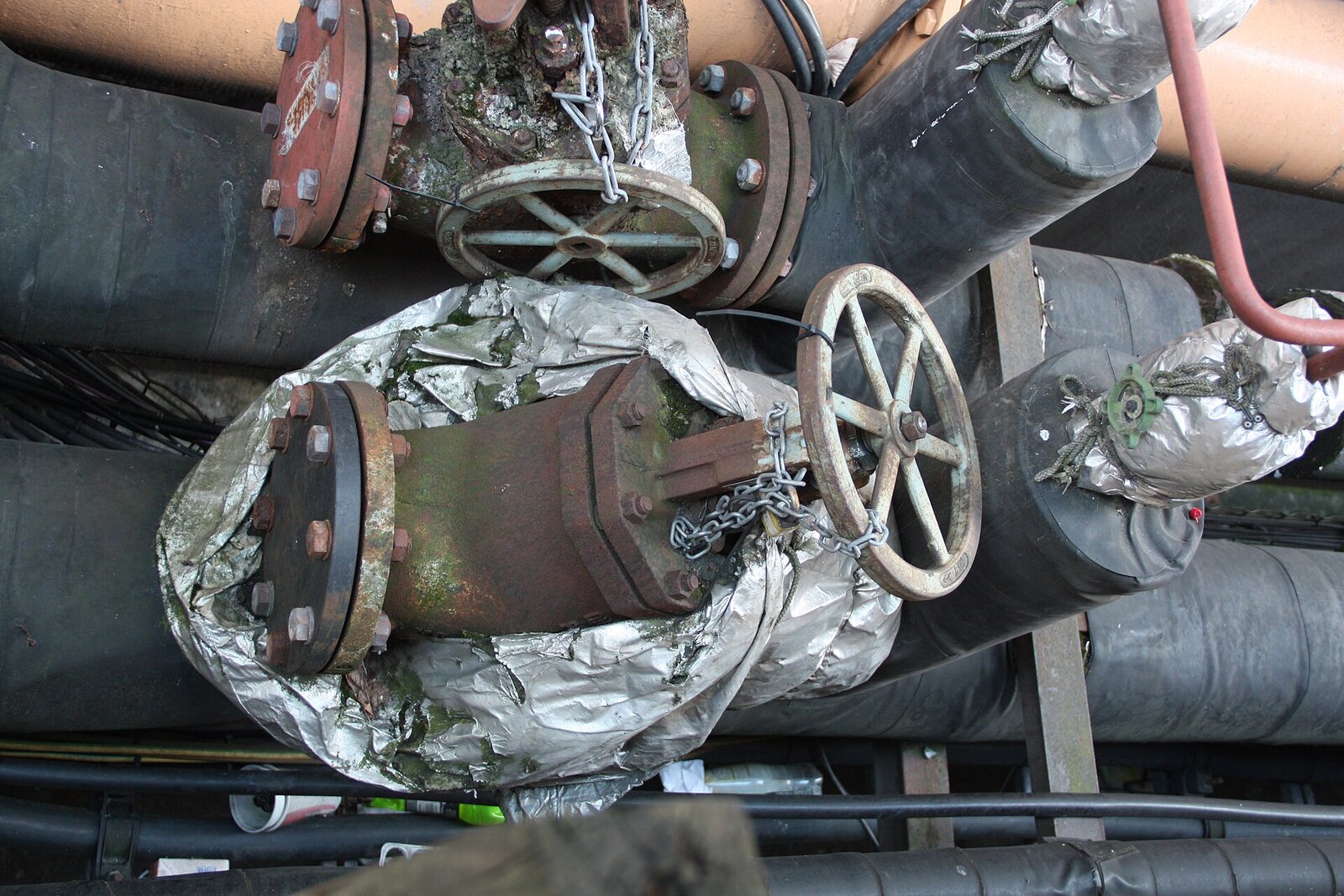
Valve Tag Color Codes: A Practical Guide to Industry Conventions
ASME A13.1 groups pipe contents into six standard color combinations by hazard type: yellow for flammables, green for water, blue for compressed air, red for fire quenching, brown for combustible fluids, and orange for toxic or corrosive materials. OSHA has no rule assigning colors to valve tags, so the color you pick is a facility decision, and most shops match it to the pipe marker already on the line.
Important Disclaimer
This article is provided for general informational purposes only and does not constitute legal, safety, or professional compliance advice. Regulations, standards, and codes are subject to change and may be interpreted differently by authorities having jurisdiction (AHJ). Always consult with qualified safety professionals, licensed engineers, or legal counsel to determine the specific requirements applicable to your facility. TagBuilder is not responsible for any actions taken based on this information.
Why Valve Tag Colors Matter
In industrial facilities, a moment of confusion at the wrong valve can turn into an incident. Color-coded valve tags let operators identify what's flowing through a pipe at a glance, without chasing down a drawing.
Many facilities build their tag color scheme on top of ASME A13.1's pipe marking categories. See our guide on pipe marking requirements under ASME A13.1.
Common valve tag color conventions
These pairings are common HVAC and plant conventions, not the text of any single standard, and practice varies by facility. Some plants classify hot water as green instead of the red shown here, so confirm against what your site already has posted.
Water Systems
| Service | Background | Text | Common Abbreviations |
|---|---|---|---|
| Chilled Water Supply | Green | White | CHWS, CWS |
| Chilled Water Return | Blue | White | CHWR, CWR |
| Hot Water Supply | Red | White | HWS, HW |
| Hot Water Return | Orange | Black | HWR |
| Domestic Water | Green | White | DW, POTABLE |
Steam and Condensate
| Service | Background | Text | Common Abbreviations |
|---|---|---|---|
| Steam (High Pressure) | Brown | White | HPS, STM |
| Steam (Low Pressure) | Brown | White | LPS, STM |
| Condensate | Brown | White | COND, CR |
Hazardous and Flammable
| Service | Background | Text | Common Abbreviations |
|---|---|---|---|
| Natural Gas | Yellow | Black | GAS, NG, FUEL |
| Fuel Oil | Yellow | Black | FO, FUEL OIL |
| Compressed Air | Blue | White | CA, AIR, COMP AIR |
Fire Protection
| Service | Background | Text | Common Abbreviations |
|---|---|---|---|
| Fire Protection | Red | White | FP, FIRE, SPRINKLER |
Best Practices for Valve Tag Programs
1. Establish a Facility-Wide Standard
Document your color scheme and distribute it to all personnel. Mixing standards across buildings or departments creates confusion. Pair it with a documented valve numbering system so every tag ties back to a drawing or asset record.
2. Include Essential Information
Every valve tag should include:
- Valve number or ID
- Service description (what's in the pipe)
- Normal position (open/closed)
- System identifier
3. Choose Durable Materials
Valve tags need to hold up to their environment:
- Engraved two-ply plastic: the everyday choice for indoor valve tags; unaffected by most washdown chemicals
- Stainless steel: better suited to outdoor, high-heat, or corrosive environments
- Brass: a traditional option some facilities still specify
4. Size Tags Appropriately
Tags should be readable from a reasonable distance:
- 1.5" diameter: standard for most valves
- 2" diameter: better visibility, more text space
- 2.5" or larger: critical valves, emergency shutoffs
See how to size valve tags for your facility for more on matching size to viewing distance.
Common Mistakes to Avoid
- Inconsistent colors: stick to one scheme facility-wide
- Poor contrast: pair light text with a dark background, or the reverse
- Worn tags: replace weathered tags promptly, since one nobody can read isn't doing its job
- Missing tags: every valve should be tagged
- Handwritten labels: use engraved or printed tags for lasting legibility
Getting Started
Ready to put a color-coded valve tag system in place? The valve tag configurator lets you design custom tags in any color and text combination. See how ordering works, or browse the valve tag shop for options like this 2-inch circle valve tag.
Common questions
What color should a chilled water valve tag be?
Many facilities mark chilled water supply green and white and chilled water return blue and white, following the convention table above. ASME A13.1 itself only classifies water broadly as green; splitting supply and return into two colors is a common HVAC practice layered on top of the standard, not something the standard spells out. Check what your site already has posted before ordering.
Does OSHA require valve tag colors?
No. OSHA does not have a regulation assigning specific colors to valve tags. The conventions in this article come from industry practice and from ASME A13.1's pipe marking scheme, which many facilities extend to their valve tags for consistency between the pipe and the valve. Check current guidance for your facility type if you're unsure what applies.
What is the ASME A13.1 color code?
ASME A13.1 assigns pipe contents to color combinations by hazard category: yellow for flammable materials, green for water, blue for compressed air and other non-hazardous gases, red for fire quenching, brown for combustible fluids, and orange for toxic or corrosive fluids, plus four more combinations each facility can define itself. Always confirm details against the current published edition.
What color are natural gas valve tags?
Under the conventions summarized in this article, natural gas lines are commonly marked yellow with black text, grouping them with other flammable fluids under ASME A13.1's yellow category. Some facilities use orange instead, so color alone shouldn't be relied on; the tag's printed service description and valve number are what actually confirm what's in the line.
Should valve tag color match the pipe marker?
Many facilities set the valve tag color to match the adjacent pipe marker so a technician sees one consistent scheme from the pipe to the valve. This is common practice rather than a formal requirement, so confirm it against your own facility's documented standard before assuming a new tag should match an existing marker on site.
What size valve tag is standard?
There's no single mandated valve tag size. Many facilities use roughly 1.5-inch diameter tags for typical valves and step up to 2 inches or larger where more text or better visibility from a distance is needed, reserving the largest sizes for critical or emergency shutoff valves.
UL, NFPA, NEC, ASME, CEMA, TIA, ANSI and OSHA are names or marks of their respective organizations; TagBuilder is not affiliated with or endorsed by any of them. Requirements above are paraphrased summaries, not the text of any standard. Always work from the current published edition and your AHJ.