Arc Flash Label Requirements: What NFPA 70E and NEC 110.16 Require
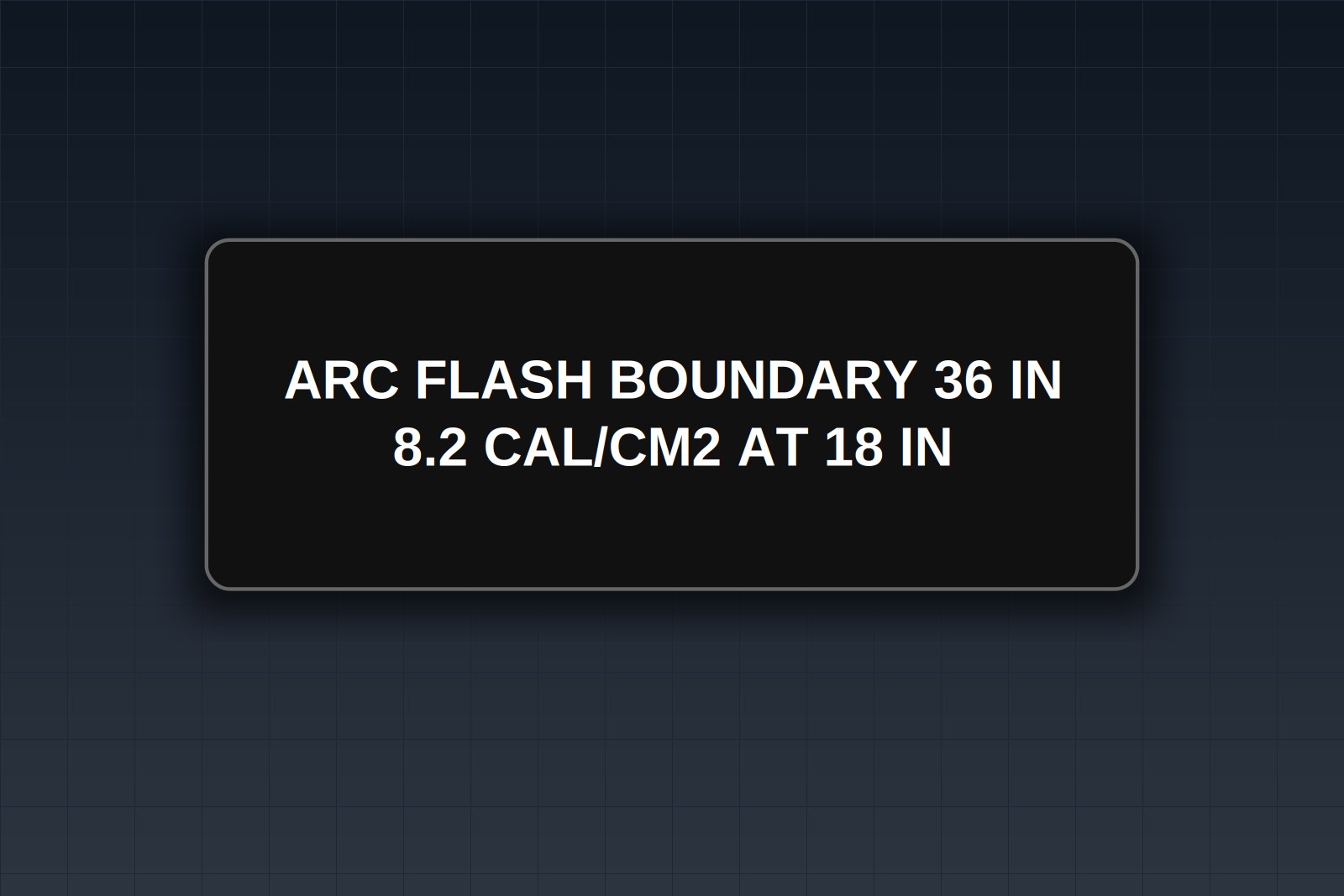
NFPA 70E 130.5(H) requires arc flash labels to show the nominal system voltage, the arc flash boundary, and either the incident energy at the specified working distance or the applicable PPE category, plus a label date in current editions. NEC 110.16 separately requires a field-applied warning label on service equipment, switchboards, panelboards, and similar gear that is likely to be worked on while energized.
Important Disclaimer
This article is provided for general informational purposes only and does not constitute legal, safety, or professional compliance advice. Regulations, standards, and codes are subject to change and may be interpreted differently by authorities having jurisdiction (AHJ). Always consult with qualified safety professionals, licensed engineers, or legal counsel to determine the specific requirements applicable to your facility. TagBuilder is not responsible for any actions taken based on this information.
The Regulatory Framework: NFPA 70E and OSHA
Arc flash labeling requirements primarily come from NFPA 70E, Standard for Electrical Safety in the Workplace. NFPA 70E itself isn't a law, but OSHA references it as a recognized industry consensus standard, and OSHA's General Duty Clause (Section 5(a)(1)) requires employers to provide a workplace free from recognized hazards, including electrical hazards. For labeling obligations that extend beyond arc flash equipment, see our overview of OSHA equipment labeling requirements.
Key Standards Interconnection
- NFPA 70 (NEC) 110.16: Requires a field-applied arc flash warning label on covered equipment at the time of installation
- NFPA 70E Article 130: Sets the workplace safety framework and specifies what content the label itself must carry
- IEEE 1584: Supplies the calculation methods commonly used to determine incident energy and arc flash boundaries
Panelboards carry their own separate marking rules for circuit directories and enclosures; see NEC 408 panel labeling requirements for that side of the equipment.
What NFPA 70E Requires: Article 130.5(H)
NFPA 70E's current edition sets out the labeling requirements for electrical equipment in 130.5(H). Labels must include at least one of the following sets of information:
Option 1 - Incident Energy Analysis Information:
- Nominal system voltage
- Arc flash boundary
- Available incident energy and corresponding working distance
- Date of the arc flash hazard analysis
Option 2 - Table-Based PPE Category:
- Nominal system voltage
- Arc flash boundary
- Arc flash PPE category (per Table 130.5(G))
- Date the label was applied
Critical Equipment Requiring Labels
Labels are expected on equipment that's likely to need examination, adjustment, servicing, or maintenance while it's energized. In practice that covers switchboards, switchgear, panelboards, industrial control panels, motor control centers, and meter socket enclosures.
Understanding the Label Content Requirements
Arc Flash PPE Category
NFPA 70E Table 130.5(G) sets out four PPE categories:
| Category | Minimum Arc Rating | Typical Equipment |
|---|---|---|
| 1 | 4 cal/cm² | Low-energy panelboards, small MCCs |
| 2 | 8 cal/cm² | Medium-energy switchboards, larger panels |
| 3 | 25 cal/cm² | Higher-energy switchgear, large MCCs |
| 4 | 40 cal/cm² | Maximum PPE category |
Important: When incident energy exceeds 40 cal/cm², work is generally not performed on that equipment while energized.
Arc Flash Hazard Analysis Date
Labels must show the date of the analysis. NFPA 70E calls for the arc flash risk assessment to be reviewed for accuracy at intervals not to exceed 5 years, and sooner whenever a major modification or renovation takes place.
The Evolution of Arc Flash Labeling Requirements
Pre-2002: No Specific Requirements
Before NFPA 70E's arc flash provisions and NEC 110.16 existed, there were no specific arc flash labeling requirements in the code.
2002-2012: Basic Warning Labels
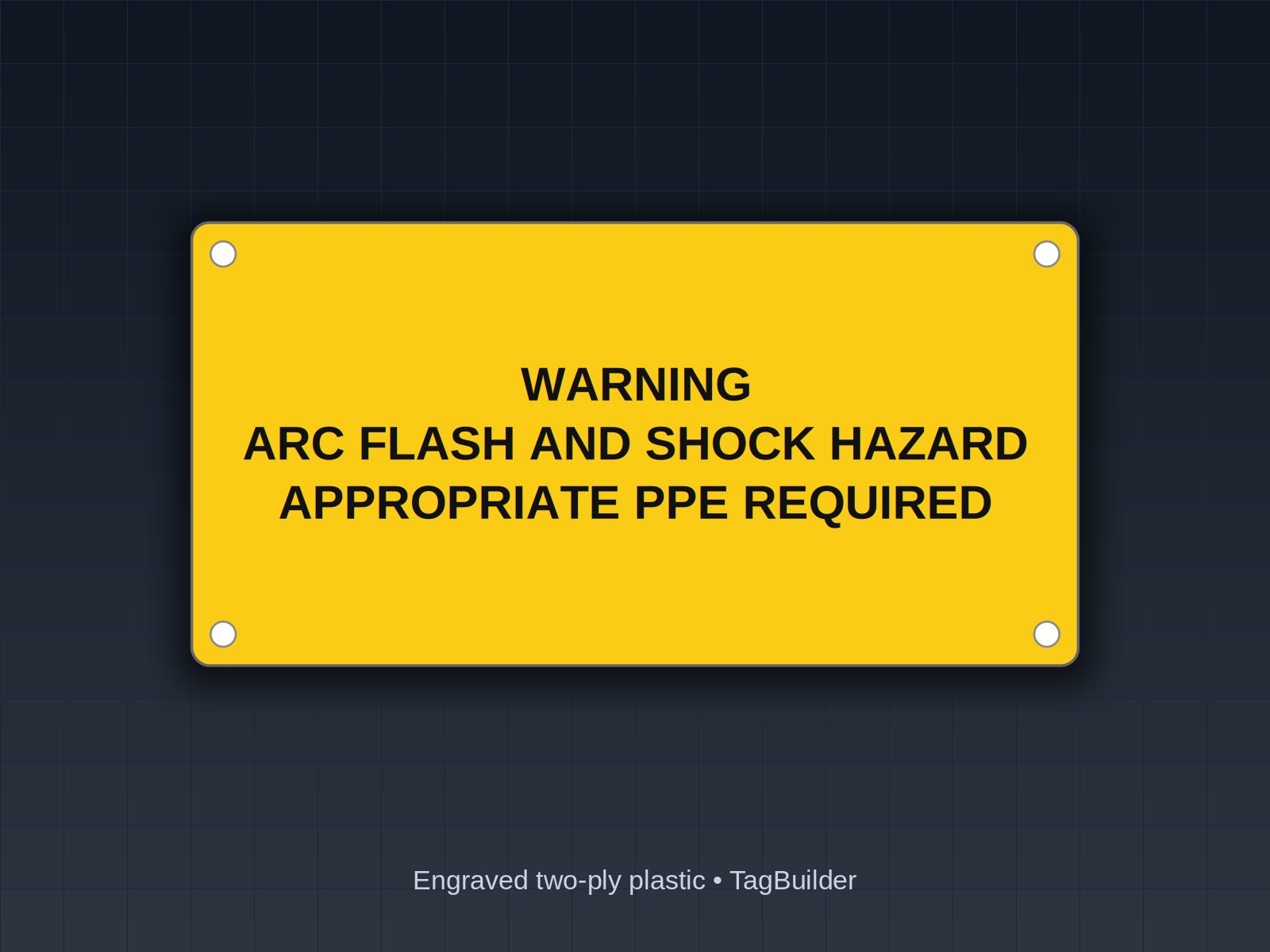
Early NEC 110.16 editions called for only a generic warning label along the lines of "Arc Flash Hazard, Appropriate PPE Required."
2018-Present: Current Requirements
Current NFPA 70E editions call for the more detailed information covered above. Labels are expected to give workers specific, actionable numbers, not just a general warning.
Label Design and Construction Requirements
Durability Considerations
Labels need to stay legible through whatever environment they're mounted in until the next scheduled reassessment. Factors that affect label selection include temperature exposure, UV exposure, oil, grease, and chemical exposure, and how the equipment gets cleaned.
Recommended materials:
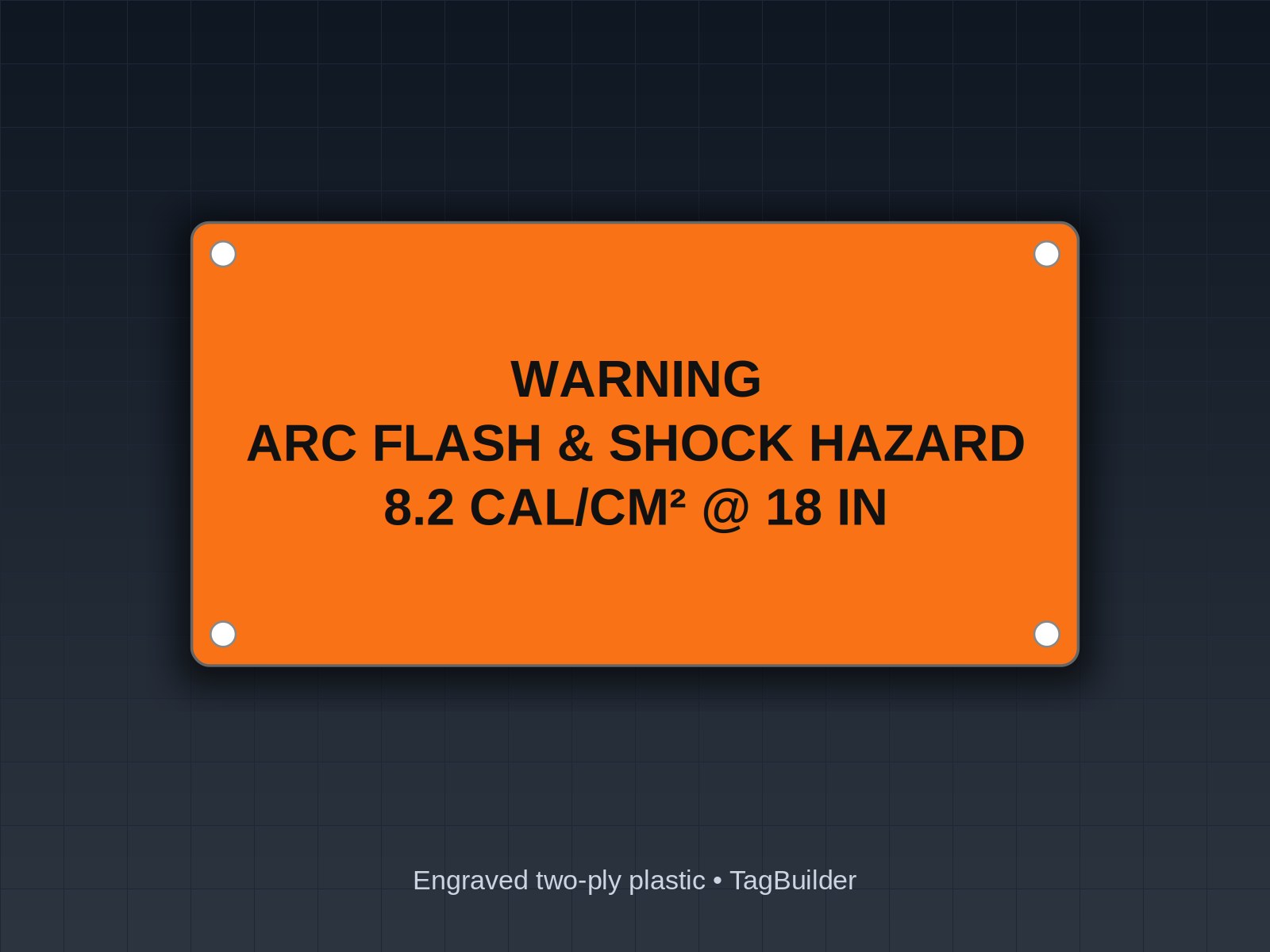
- Engraved two-ply plastic for most indoor equipment labeling
- Engraved aluminum or stainless for high-heat, outdoor, or otherwise harsh service
- Printed polyester or laminated vinyl, an option where a printed format fits moderate environments and lower unit cost matters more than long-term exposure
Label Placement
Labels must be visible to qualified persons before examination, adjustment, servicing, or maintenance. They should sit on or adjacent to the equipment and be positioned so they can be read without opening doors or removing covers. Where equipment also carries lockout/tagout tags, keep the arc flash label separate and equally visible rather than layered under other tags.
Common labeling mistakes
Based on inspection findings and industry experience, these are frequent arc flash labeling deficiencies:
- Outdated Labels: Labels that haven't been updated after system modifications or that exceed the 5-year review interval
- Missing Equipment: Equipment that's likely to be worked on energized but was never labeled at all
- Incomplete Information: Labels missing one or more of the required elements
- Generic Warning Labels: Old-style labels without quantitative hazard information
- Illegible Labels: Labels that have degraded due to environmental exposure
- Labels Inside Enclosures: Labels placed where workers must open the equipment to read them
Conclusion: Labels as Safety Communication
Arc flash labels are the communication link between an engineering analysis and the worker standing in front of energized equipment. A well-designed, properly installed, accurately maintained label gives that worker the essentials:
Here's the voltage. Here's how dangerous this could be. Here's how far back you should stand. Here's the protection you need.
Keeping labels current, and making sure workers understand them, isn't just about staying in line with NFPA 70E. It's about giving everyone who approaches energized equipment the information they need to go home safely.
Need Arc Flash Labels for Your Facility?
Keeping your arc flash labels current and legible protects your workers and keeps your equipment in line with NFPA 70E. TagBuilder makes engraved arc flash labels sized and worded for demanding electrical environments, and see how ordering works if you haven't ordered from us before.
Our custom label builder lets you create:
- Labels with all required NFPA 70E information fields
- Custom incident energy values from your arc flash study
- Durable materials suited to heat and UV exposure
Choose the incident energy label if your study gives you specific values, or the refer-to-study label for equipment where the full study is kept on file elsewhere, or browse the full arc flash label lineup →.
Have arc flash study results you need turned into labels? Contact us for bulk pricing on custom arc flash labels.
Common questions
What information must be on an arc flash label?
Under NFPA 70E 130.5(H), a label needs the nominal system voltage and the arc flash boundary, plus either the incident energy at the stated working distance or the arc flash PPE category from Table 130.5(G). Current editions expect a label date as well. Many facilities also add an equipment ID and the date of the underlying hazard analysis so the label can be traced back to its source study.
How often do arc flash labels need to be updated?
NFPA 70E calls for the arc flash risk assessment behind the label to be reviewed at intervals not to exceed 5 years, and sooner whenever equipment is modified in a way that could change available fault current or clearing times. If a review changes any value shown on the label, the label itself needs to be replaced to match the updated study.
Who is responsible for arc flash labels?
NFPA 70E treats labeling as an employer responsibility, usually carried out through the facility's electrical safety program with input from whoever performs the arc flash study, often a qualified engineer or outside consultant. Equipment owners are generally expected to keep labels current even after equipment changes hands or gets relocated within a plant.
Is an arc flash study required before labeling?
In most cases, yes. The incident energy or PPE category shown on a label comes from an arc flash hazard analysis, commonly using methods such as those in IEEE 1584, so a study normally has to happen first. Some facilities use conservative table-based methods from NFPA 70E to assign a PPE category without a full incident energy calculation, but that still means a documented process, not a guess.
Can I use a generic arc flash warning label?
Generic wording like "Arc Flash Hazard, Appropriate PPE Required" was common under older NEC editions but doesn't meet current NFPA 70E 130.5(H) content requirements on its own. Many AHJs and safety programs now expect the voltage, boundary, and incident energy or PPE category spelled out on the label itself, rather than pointing the worker somewhere else for numbers.
Where should the label be placed?
The label should sit on or next to the equipment where a qualified person can read it before opening a door or removing a cover, not inside the enclosure. On switchboards, panelboards, and motor control centers this usually means the front of the section housing the equipment being worked on, at a height where it can be read without tools.
UL, NFPA, NEC, ASME, CEMA, TIA, ANSI and OSHA are names or marks of their respective organizations; TagBuilder is not affiliated with or endorsed by any of them. Requirements above are paraphrased summaries, not the text of any standard. Always work from the current published edition and your AHJ.