OSHA Equipment Labeling Requirements for Industrial Facilities
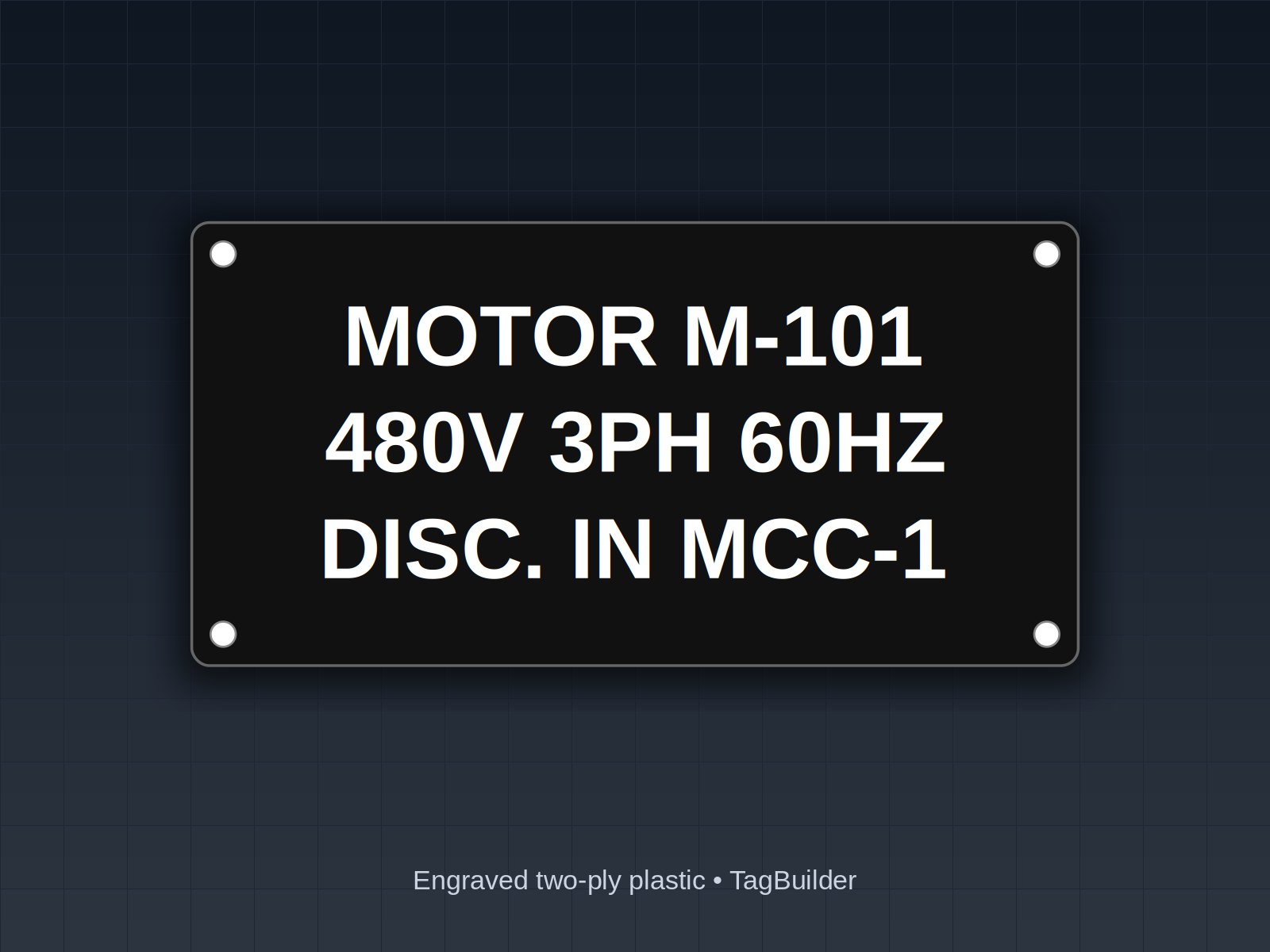
29 CFR 1910.303(f) requires that disconnecting means for motors, appliances, and other equipment—and each service, feeder, or branch circuit at its point of disconnect—be legibly marked to show its purpose, unless that purpose is obvious from where it sits. A related rule, 1910.145, sets the signal-word format (danger, warning, caution) for the accident-prevention signs and tags used throughout a facility.
Important Disclaimer
This article is provided for general informational purposes only and does not constitute legal, safety, or professional compliance advice. Regulations, standards, and codes are subject to change and may be interpreted differently by authorities having jurisdiction (AHJ). Always consult with qualified safety professionals, licensed engineers, or legal counsel to determine the specific requirements applicable to your facility. TagBuilder is not responsible for any actions taken based on this information.
This guide breaks down the specific OSHA requirements behind equipment labeling, the penalty ranges tied to violations, and practical steps for building a labeling program that holds up to inspection.
The Regulatory Background: Where Equipment Labeling Requirements Come From
OSHA's equipment labeling requirements come from several interconnected standards, each addressing a different piece of workplace safety. The most relevant include:
29 CFR 1910.145 (Accident Prevention Signs and Tags) sets the baseline requirements for safety signs and tags throughout industrial facilities, including the design, application, and placement of danger signs, caution signs, safety instruction signs, and accident prevention tags.
29 CFR 1910.147 (Control of Hazardous Energy — LOTO) calls for identification and labeling of energy-isolating devices and lockout/tagout equipment. Machines and equipment need to be identifiable, and energy sources need to be clearly marked—see our LOTO tag requirements article for specifics.
29 CFR 1910.303 (Electrical — General Requirements) calls for electrical equipment to be marked with the manufacturer's name or trademark and other ratings as needed, and for disconnecting means to be legibly marked to show their purpose unless that purpose is evident.
29 CFR 1910.335 (Electrical Safeguards) addresses safety signs, symbols, and tags around electrical hazards, calling for clear identification of circuits and equipment.
Specific Equipment Labeling Requirements by Category
Electrical Equipment Identification
OSHA calls for labeling across several parts of an electrical system. Specifically:
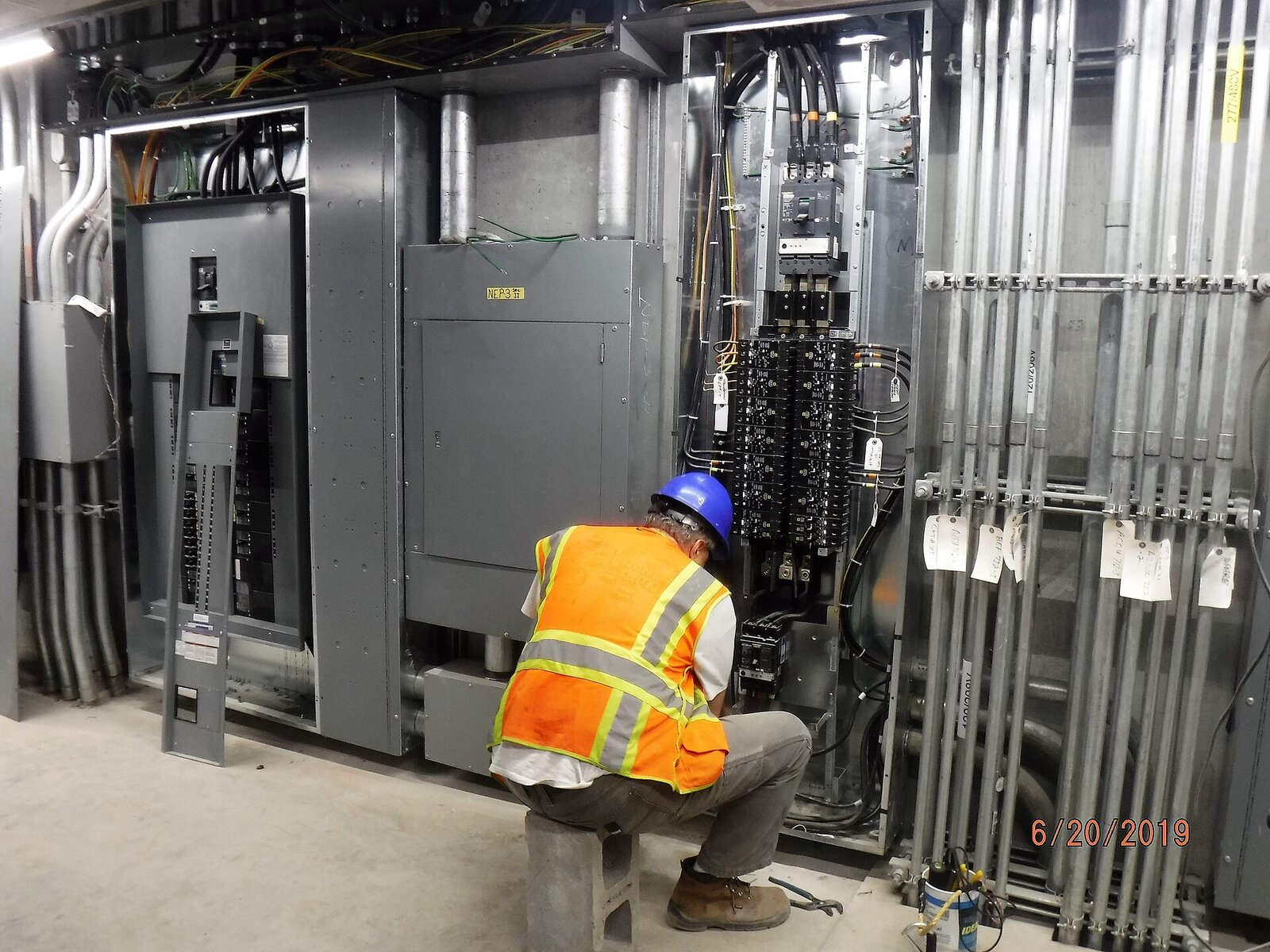
Service Equipment and Disconnects: Disconnecting means for motors, appliances, and other equipment generally need to be legibly marked to show their purpose, with the marking staying visible after installation. When circuit breakers or switches serve as disconnects, they need to identify what load they control.
Panelboards and Switchboards: Circuit directories should identify each circuit's purpose, and panel schedules should be kept accurate as circuits change. NEC 408.4 language, commonly enforced by inspectors, extends this expectation to spare or unused spaces as well—confirm current practice with your electrical inspector. For more, see our article on panel labeling under NEC 408.
Motor Control Centers: Individual unit compartments generally need identification of the motor or load they control, including voltage, phase, and current ratings where relevant.
Transformers: Transformers should display voltage ratings, and warning signs indicating voltage hazards are called for where a transformer is accessible to unqualified persons.
Piping System Identification
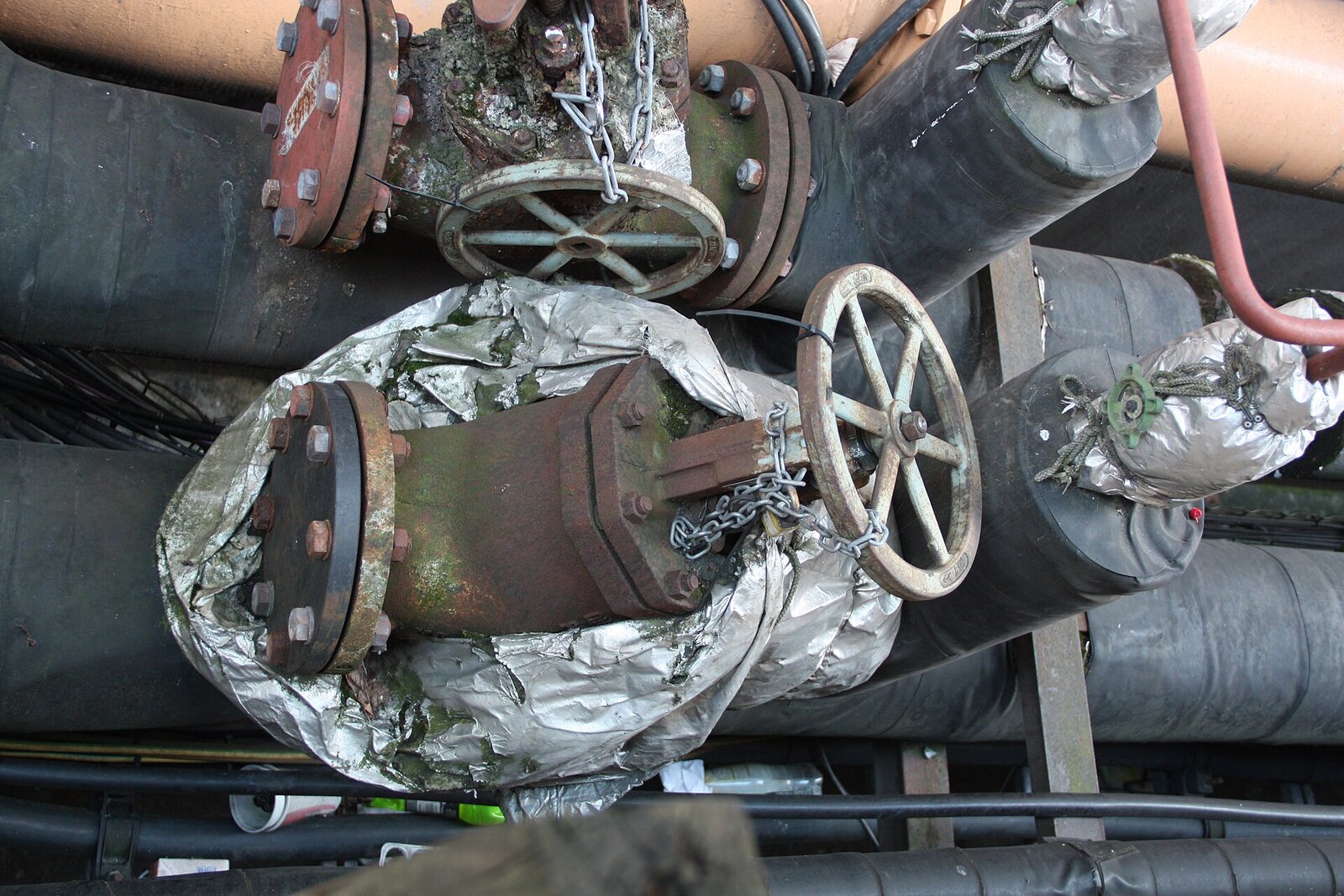
Under OSHA's Hazard Communication Standard (29 CFR 1910.1200) and general duty obligations, piping systems carrying hazardous materials need to be identified. OSHA doesn't mandate a specific color-coding scheme, but the industry standard ANSI/ASME A13.1 is widely used as a reference.
Machinery and Equipment Tags
Machine Guards: Equipment with guards generally needs a warning label indicating the hazard when guards are removed, along with contact information or instructions for guard replacement.
Operating Controls: Control switches and buttons should be labeled to show their function. Emergency stop controls need clear identification, typically with red coloring and E-STOP or EMERGENCY STOP labeling.
Capacity and Rating Plates: Equipment such as hoists, cranes, and lifting devices needs rated capacity displayed prominently, legible, and positioned where operators can readily see it.
What a Missing Label Can Cost You
OSHA raises its civil penalty maximums every January to keep pace with inflation, so any figure below is a snapshot rather than a fixed number.
| Violation type | 2025 maximum | Notes |
|---|---|---|
| Serious / other-than-serious | $16,550 per violation | A hazard the employer knew or should have known about, ranging from a substantial probability of death or serious physical harm down to less severe safety and health issues |
| Willful / repeat | $165,514 per violation | Intentional disregard or plain indifference to a requirement, or a substantially similar violation repeated within five years of the original citation |
| Failure to abate | $16,550 per day | Runs past the abatement deadline for as long as the hazard continues |
These maximums change every year—check OSHA's current penalty page before relying on any of these numbers.
Building a Labeling Program That Holds Up
Step 1: Conduct a Comprehensive Audit
Before ordering labels, understand your current state. Walk every area of the facility with the relevant OSHA standards in hand. Document every piece of equipment that needs identification, photograph existing labels to assess legibility and accuracy, and note environmental conditions that will affect label durability.
Step 2: Develop Labeling Standards
Create internal standards that meet or exceed OSHA's requirements. Define consistent naming conventions that align with your maintenance management system, and specify label materials suited to each environment.
Step 3: Select Appropriate Label Solutions
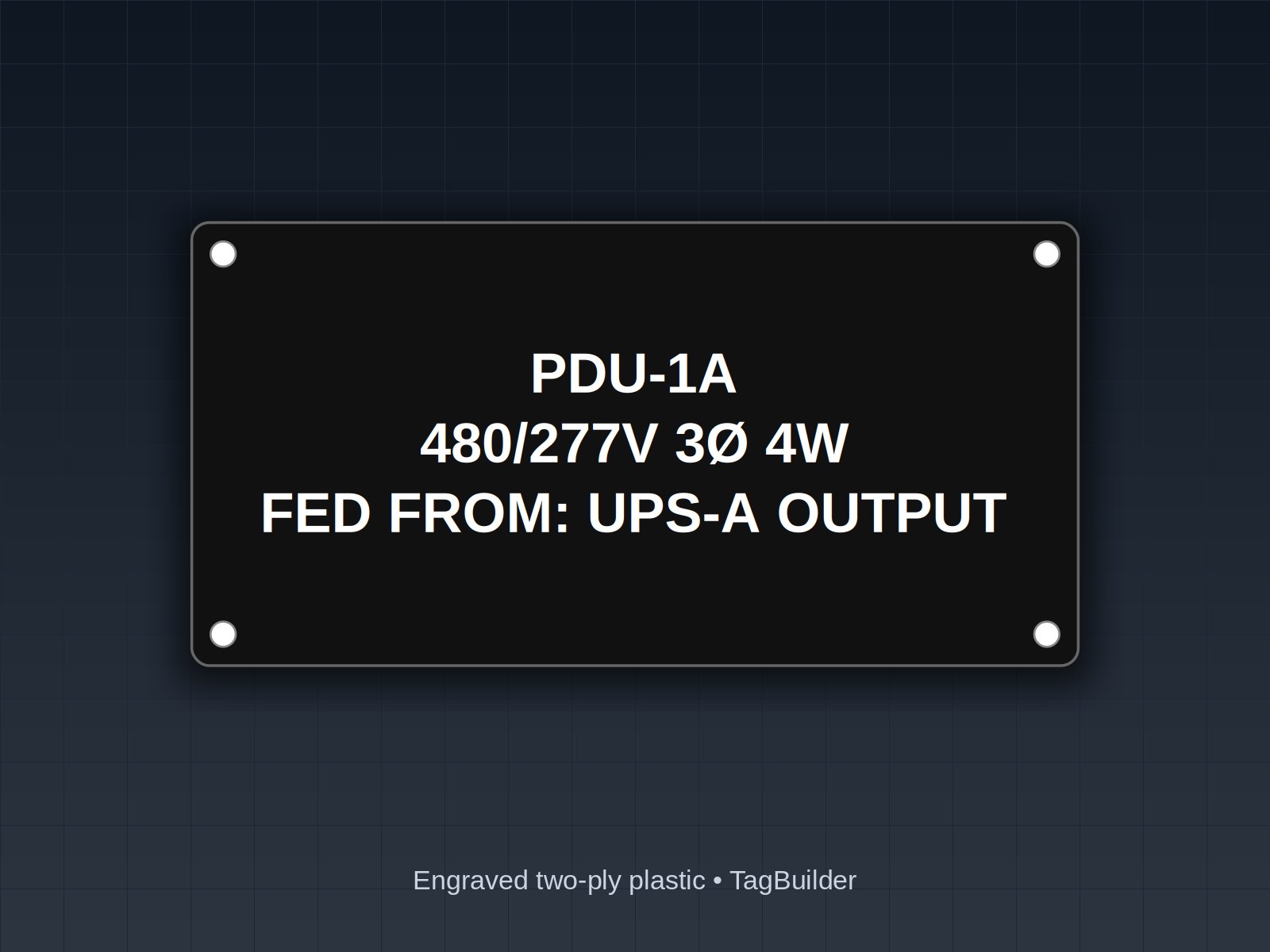
Engraved Tags and Plates: For lasting identification of electrical equipment, valves, and machinery. Engraved two-ply plastic or engraved stainless tags hold up well in harsh industrial environments—browse common formats on our equipment ID tag page.
Adhesive Labels: Suited to indoor applications with moderate environmental exposure.
Hanging Tags: Used for temporary identification, equipment status, and lockout/tagout applications.
Step 4: Implement and Document
Roll out the labeling program systematically. Prioritize life-safety systems and high-hazard equipment, install labels according to your documented standards, and photograph completed work for your own records.
Step 5: Maintain and Update
Labels aren't install-and-forget. Build label inspection into routine maintenance rounds, replace degraded or damaged labels promptly, and update labels whenever equipment changes.
Equipment Identification as an Everyday Safety Habit
OSHA's equipment labeling requirements exist because clear identification saves lives. Workers can't avoid hazards they don't know about, maintain equipment they can't identify, or follow lockout steps on energy sources that aren't marked.
Labeling a facility properly is a modest amount of work next to the cost of a citation—and small next to the cost of a preventable injury.
Getting Your Labels Made
Once you know what needs to be marked, ordering the tags is the straightforward part. TagBuilder's configurator lets you set your own text and numbering, choose a material suited to the environment, preview the layout before you commit, and order any quantity—see how ordering works.
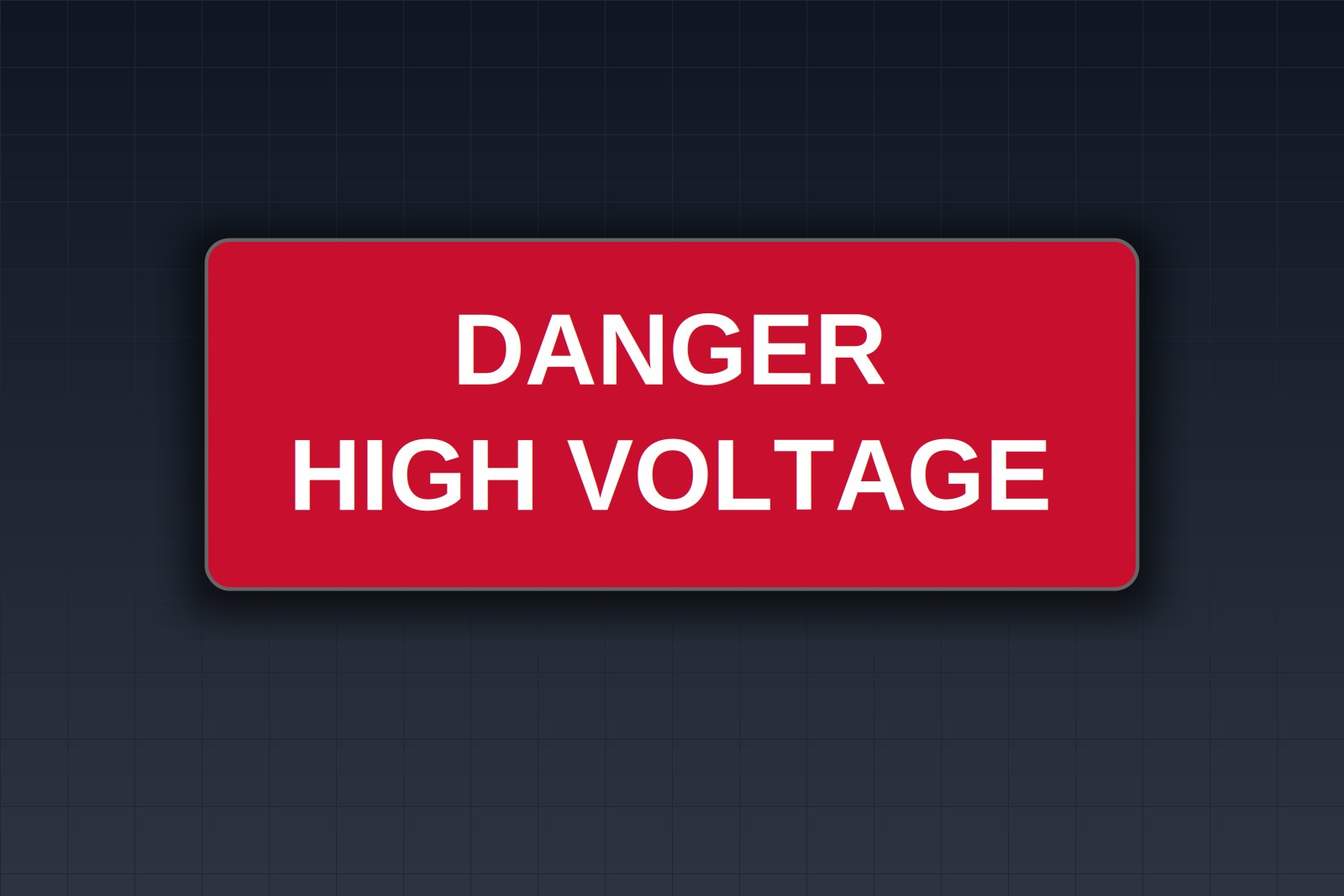
Common starting points include device ID tags for OEM equipment and high-voltage warning labels for panels and enclosures. For arc flash marking specifics, see our NFPA 70E arc flash label article.
Common questions
Does OSHA require equipment to be labeled?
Not under one single blanket rule—the requirement comes from several standards depending on the equipment. Electrical disconnects, service equipment, and certain circuits fall under 1910.303(f); safety signs and tags fall under 1910.145; energy-isolating devices used in lockout/tagout fall under 1910.147. Most industrial equipment ends up covered by at least one of these.
What OSHA standard covers equipment labels?
There isn't one standard that covers every case. 1910.303 addresses electrical equipment marking and disconnect identification, 1910.145 covers danger, caution, and safety-instruction signs, and 1910.147 covers labeling tied to lockout/tagout energy-isolating devices. Which one applies depends on the equipment and hazard involved—check the specific standard for your situation.
Do electrical disconnects have to be labeled?
Generally yes. 1910.303(f) calls for disconnecting means for motors, appliances, and other equipment, along with each service, feeder, or branch circuit at its disconnect, to be legibly marked to show its purpose, unless that purpose is obvious from where the disconnect sits. The marking needs to stay visible after installation.
What has to be on a machine nameplate?
This varies by equipment type and manufacturer, but nameplates commonly show ratings such as voltage, current, or capacity, plus identifying information tying the unit to maintenance records. Hoists, cranes, and lifting devices typically need rated capacity posted where an operator can see it. Check the manufacturer's documentation and applicable standard for the specific machine.
Are handwritten labels acceptable?
OSHA doesn't require a specific label-making method—the standards call for markings to be legible, not for any particular material or process. A handwritten tag can meet that bar if it stays readable in the equipment's environment. Many facilities move to more durable engraved or printed tags simply because handwriting fades or smears over time.
How much is an OSHA fine for missing labels?
It depends on how the violation is classified. For 2025, OSHA's maximum was $16,550 per violation for serious and other-than-serious citations, $165,514 per violation for willful or repeat citations, and $16,550 per day for failure to abate. These maximums are adjusted every January, so check OSHA's current penalty page for the figure in effect now.
UL, NFPA, NEC, ASME, CEMA, TIA, ANSI and OSHA are names or marks of their respective organizations; TagBuilder is not affiliated with or endorsed by any of them. Requirements above are paraphrased summaries, not the text of any standard. Always work from the current published edition and your AHJ.